How to Get Hair Loss Treatment Home Delivered in Canada
Most Canadian hair loss is driven by DHT, a hormone that gradually miniaturizes follicles over time, and treatment only works if you stay consistent with it. Virtual care platforms now let you complete an online assessment, get a prescription from a licensed clinician, and have medication shipped to your door every three months. The key difference from a traditional pharmacy is built-in follow-up support so your treatment can be adjusted as needed.
Hair loss affects an estimated 7 million men and 4 million women across Canada. Getting prescription-grade treatment delivered to your door is now straightforward: complete an online questionnaire, get reviewed by a licensed clinician within 24 to 48 hours, and receive your medication shipped discreetly on a recurring schedule.
You glance in the mirror and notice your hairline isn't quite where it used to be, or your part line looks a little wider than it did last year. Believe it or not, it's very common.
Hair loss affects an estimated 7 million men and 4 million women across Canada, fueling roughly $400 million in annual spending, much of it on solutions that never actually address what's causing the problem in the first place.
Getting real, prescription-grade treatment doesn't have to mean taking time off work for a specialist appointment or standing at a pharmacy counter explaining your prescription to whoever happens to be behind the till.
What that process actually looks like, what the ongoing delivery experience covers, and where to go to get it done.
Why hair loss treatment needs to be ongoing, not one-and-done
Before getting into logistics, it helps to understand why delivery and refills matter clinically, not just for convenience.
Most hair loss comes down to androgenetic alopecia, a genetically driven process powered by a hormone called dihydrotestosterone (DHT).
- Your follicles have receptors that are overly sensitive to DHT. When DHT binds to them, it sends a signal to shrink, a process called miniaturization.
- This shortens your hair's growth phase from years down to just months over successive cycles.
- Managing DHT is an ongoing metabolic commitment, not a short course of antibiotics you finish and move on from.
- If you stop taking a DHT blocker like finasteride, your levels rebound, and miniaturization resumes within months.
This is why the value of any treatment plan depends on staying consistent with it. A reliable delivery and refill system stops being a nice-to-have and starts being the thing that determines whether treatment actually works.
How the virtual consultation and delivery process works
Getting hair loss treatment delivered to your door typically follows the same basic sequence, regardless of which platform you use:
- Complete an online health questionnaire covering your specific pattern of hair loss, medical history, and goals
- A licensed physician or clinician reviews your intake, either asynchronously or through a short virtual meeting, usually within 24 to 48 hours
- If the assessment supports it, an e-prescription is issued and sent straight to a partner pharmacy
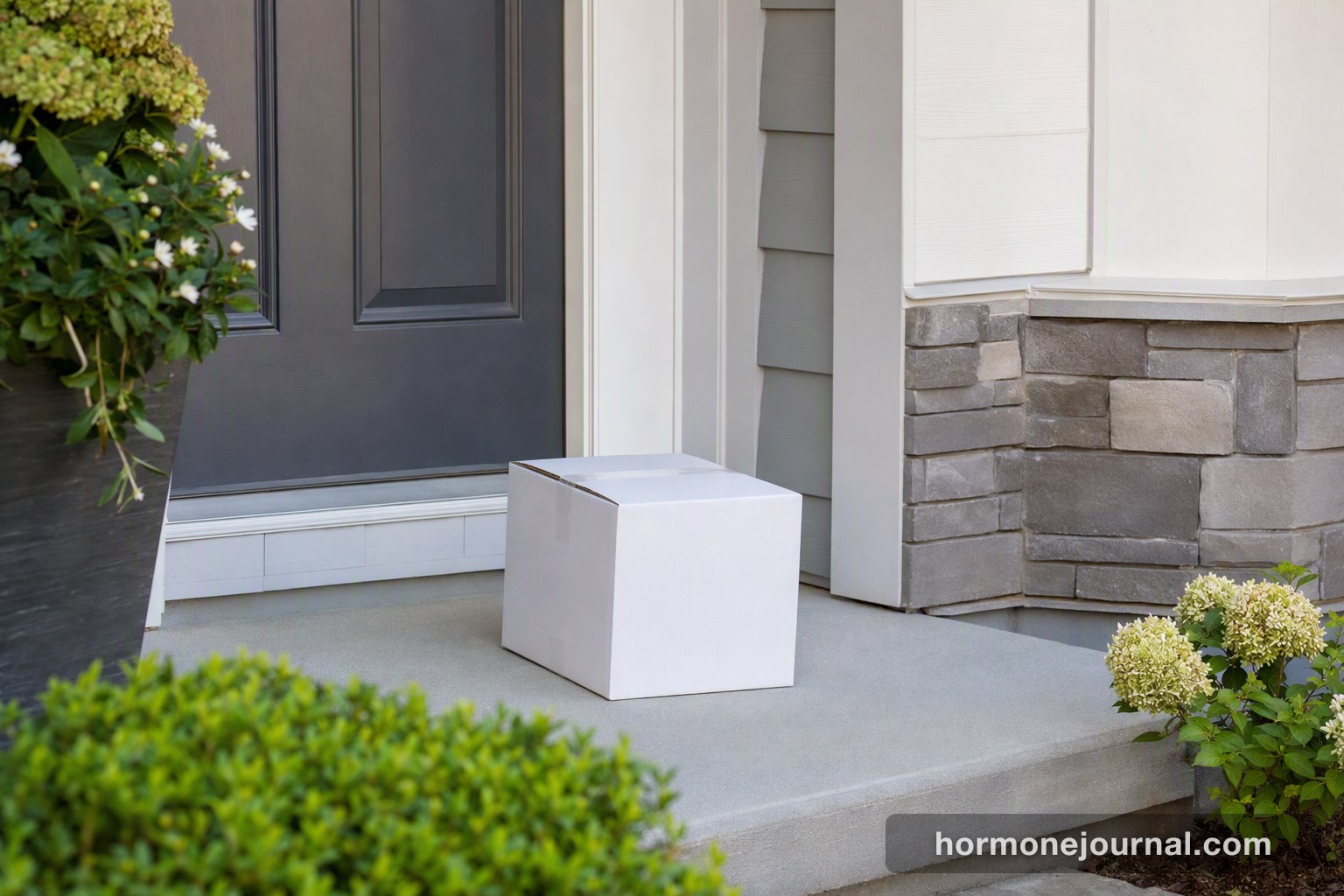
- Your medication ships to your home in discreet packaging, with no in-person pharmacy visit required at any point
This model exists specifically to remove geography as a barrier. Whether you're in a major city or somewhere without easy access to a dermatologist, the process looks the same.
What to expect from home delivery
Once you're set up, here's what the ongoing experience typically looks like:
- Medication arrives without any obvious labeling of what's inside, so there's no exposure at the door or with anyone you live with
- Most platforms ship on a recurring schedule (commonly every three months) rather than requiring you to reorder manually each time
- Your prescription typically stays valid for a set period, often up to a year, covering several shipments before it needs to be renewed
- If your dose or formulation needs to change, this usually happens through a follow-up consultation rather than starting the whole process over
Knowing these details upfront helps you compare providers on more than just price, since the actual delivery experience varies quite a bit between platforms.
Delivery vs. pharmacy pickup: what's actually different
| Factor | Home Delivery | Traditional Pharmacy Pickup |
|---|---|---|
| Privacy | Discreet, unmarked packaging | In-person pickup, prescription visible to pharmacy staff |
| Convenience | Ships automatically on a set schedule | Requires remembering to reorder and physically visiting each time |
| Ongoing clinical support | Often includes follow-up consultations and dosage adjustments | Typically requires booking a new appointment for any changes |
| Refill process | Automated, tied to your prescription's validity window | Manual, dependent on you tracking when you're running low |
The biggest practical difference isn't actually the delivery itself; it's what happens around it. A pharmacy hands you a bottle and sends you on your way. A well-built delivery model keeps you connected to a clinician who can actually respond if something isn't working.
Which provider should you actually use?
Not all delivery-based hair loss platforms work the same way. Before committing, look for:
- Licensed clinicians reviewing your case, not just an algorithm approving a standard prescription
- Transparent, upfront pricing, so you know exactly what you're paying for before you commit
- Genuinely discreet packaging and delivery, not just a claim on a marketing page
- Real follow-up support, since a one-time prescription doesn't do much if your treatment needs adjusting six months in
Science & Humans is one platform built around these criteria. The process starts with an online assessment, reviewed by a licensed clinician, and if you're eligible, a Health Canada-approved prescription is issued.
From there, treatment, an oral pill, topical liposomal gel, or topical solution depending on what fits your case, ships to your door every three months for a $10 delivery fee, with your prescription valid for up to a year across four shipments. If your care plan isn't approved, you may be eligible for a refund.
What sets this apart from just ordering a bottle online is the ongoing piece. You get ongoing access to a care team, so if your treatment needs adjusting based on tolerance or response, that happens through a real follow-up rather than you guessing on your own. Given that DHT-driven hair loss requires continuous management to keep working, that kind of built-in feedback loop is arguably more valuable than the delivery itself.
Conclusion
Getting hair loss treatment delivered to your door in Canada isn't just about skipping a trip to the pharmacy. It's about staying consistent with a treatment that only works if you actually keep taking it, something a reliable delivery and follow-up system is specifically built to support. If you're comparing options, look past the packaging and pricing alone and pay attention to whether real clinical support is built into the process. Science & Humans is a solid example of getting that balance right, from the initial assessment through ongoing care.
FAQs
How do I get hair loss medication delivered in Canada? You typically complete an online health questionnaire, have a licensed clinician review your case (often within 24 to 48 hours), and if approved, receive an e-prescription that's filled and shipped directly to your home.
Is the packaging discreet? Yes, reputable platforms ship medication in unmarked packaging with no visible labeling of the contents, so there's no exposure at your door.
How often does treatment get delivered? Most platforms ship on a recurring schedule, commonly every three months, so you don't need to manually reorder each time.
Do I need to see a doctor in person first? No. The entire process, from assessment to prescription, is handled virtually through licensed clinicians who review your case online.
What happens if I need to change my prescription? This is usually handled through a follow-up consultation with your care team, who can adjust your dosage or formulation based on how you're responding to treatment.
Is delivery available across all of Canada? Many virtual care platforms are built specifically to serve patients nationwide, removing geography as a barrier to specialized care, though it's worth confirming availability in your specific province before signing up.
This article is for informational purposes only and does not constitute medical advice. Always consult a licensed healthcare provider before starting or changing any hair loss treatment plan. Program availability varies by province.
Reviewed for accuracy by the HormoneJournal.com editorial team. Platform features and process descriptions were cross-referenced against publicly available provider information as of August 2026.
Last verified: 2026-08-03